
Platelet-Rich Fibrin (PRF) Injections in Chicago
What are platelet rich fibrin injections?
Platelet rich fibrin (PRF) injections have become a popular treatment option for individuals suffering from knee arthritis, peripheral neuropathy, tendon and ligament injuries, rotator cuff injuries, muscle injuries, joint pain and inflammation, and more.
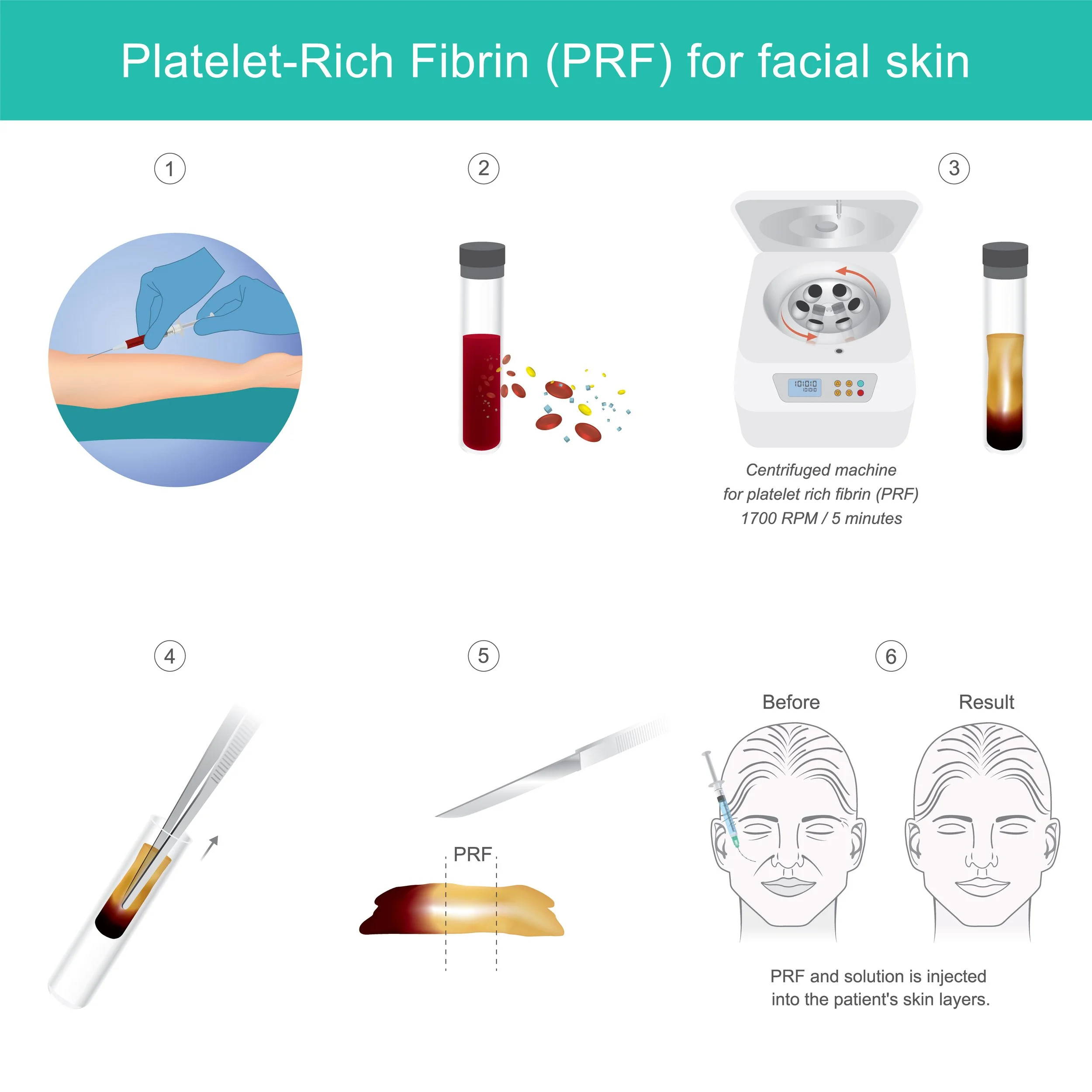
The procedure involves extracting a small amount of blood and then separating its components to obtain platelet rich fibrin, a substance that is chock-full of growth factors and has healing properties. Then it’s injected directly into the knee joint or other part of the body to help reduce inflammation and pain while promoting healing.
PRF for skin
Platelet rich fibrin (PRF) is increasingly utilized in skin rejuvenation procedures for its regenerative properties. At Arogya Medical, PRF is combined with microneedling (vampire facial) to enhance skin tone and texture, promoting a more youthful appearance by stimulating collagen production and facilitating healing. Additionally, PRF is effective in reducing the appearance of dark circles under the eyes, targeting the delicate skin in that area to improve overall brightness and reduce pigmentation.
PRF for pain or injuries
At Arogya Medical, Platelet Rich Fibrin (PRF) is employed as a therapeutic option for treating various sports injuries, tendon and ligament injuries, pain from neuropathy, and osteoarthritis. PRF harnesses the body’s own healing properties by concentrating growth factors, which can accelerate tissue repair and reduce inflammation. In the case of sports injuries, PRF aids in promoting recovery of damaged tendons and ligaments, enhancing the healing process while minimizing downtime. For patients suffering from neuropathic pain and osteoarthritis, PRF injections can alleviate discomfort by improving blood flow and facilitating tissue regeneration. This innovative treatment modality offers a natural and effective alternative for individuals aiming to alleviate pain and enhance mobility.
How are PRF injections performed?
During the procedure, a small amount of blood is drawn from the patient’s arm and spun in a centrifuge. This separates out the platelet-rich fibrin, which is then injected directly into the affected area.
When will I start seeing improvements?
The effects of PRF injections are typically gradual, with noticeable improvements often observed several weeks after the procedure.

Dr. George Antonopoulos
Arogya Medical Co-founder
Medical Specialist
Potential PRF injection side effects
Infection
One potential complication following a platelet-rich plasma injection is infection. This can occur if proper sterile techniques are not followed during the procedure or if the injection site is not adequately cleaned before the injection. At Arogya Medical, our providers ensure infection doesn’t occur.
Nerve injuries
Nerve damage can occur if the injection is not administered correctly, leading to symptoms such as pain, numbness, or weakness in the affected area. However, we ensure the injections are done correctly. Our Regenerative Care provider, Dr. George Antonopoulos, DNP-FPA, APRN-BC, MSN-FNP, has a lot of experience with this procedure.
Pain and swelling at the injection site
Some patients may experience temporary inflammation and pain after the procedure, which is part of the natural healing response. Patients are still able to leave the office and return home on the same day.
Recovery and Aftercare:
Managing discomfort:
After the injection, the area may be iced to reduce any swelling or discomfort, and you’ll be given post-procedure care instructions. Over-the-counter pain relievers can be used to alleviate discomfort, but it is advised to avoid non-steroidal anti-inflammatory drugs (NSAIDs) as they may interfere with the healing response.
Returning to activities:
Patients can generally resume their regular activities shortly after the procedure, but strenuous use of the treated area should be avoided for a few days to a week. As the healing process progresses, physical therapy or rehabilitation exercises may be introduced.
Following advice:
It is important to follow the specific advice provided by our healthcare provider. Follow post-treatment instructions closely for optimal recovery and healing.
Why you might feel under the weather after your PRF injection
Have you ever wondered why you might feel a bit “off” after getting a PRF (Platelet-Rich Fibrin) injection for your achy joint? Don’t worry, it’s not because tiny gremlins have invaded your body – it’s actually a sign that your immune system is working overtime!
The healing party in your joint
Imagine your joint as a construction site, and the PRF injection as a crew of enthusiastic workers arriving to fix things up. Here’s what’s happening:
- The Arrival of the Repair Crew: When the PRF is injected, it’s like a flood of tiny construction workers (platelets and growth factors) rushing to the scene.
- Setting Off the Alarm: This sudden influx of activity triggers your body’s immune system. It’s like your internal security system saying, “Hey, what’s going on here?”
- The Immune System’s Response: Your body sends in its own team (white blood cells) to investigate and assist with the healing process.
Why you might feel flu-ish
This flurry of cellular activity can lead to some temporary side effects that might remind you of the flu:
- Fatigue: Your body is diverting energy to heal the injected area.
- Mild fever: A slight temperature increase is your body’s way of creating an optimal environment for healing.
- Achiness: The inflammation process can cause general discomfort.
The science behind the symptoms
Scientifically speaking, what you’re experiencing is a controlled inflammatory response. The platelets in the PRF release cytokines and growth factors, which attract healing cells to the area. This process, known as chemotaxis, can lead to a systemic response that mimics flu-like symptoms.
Embracing the healing process
Remember, these symptoms are generally mild and short-lived. They’re actually a good sign that your body is responding to the treatment and kickstarting the healing process. It’s like your body is throwing a “renovation party” in your joint!So, the next time you feel a bit under the weather after your PRF injection, just think of it as your body’s way of saying, “Renovations in progress. Please pardon our dust!”
Who Might Be a Candidate for PRF?
- Ongoing joint, tendon, hair, or skin concerns that have not fully improved with rest, lifestyle changes, or standard treatments
- Interest in trying a non‑surgical, biologic option that uses your own blood products
- Generally good overall health without uncontrolled chronic illness or active infection
- Not pregnant or breastfeeding, and not on certain blood‑thinning medications (to be reviewed with a clinician)
- Willing to avoid smoking or nicotine around the time of treatment, since it may affect healing
Risks and Side Effects
- Pain, swelling, or bruising at the blood draw or injection site
- Temporary stiffness or symptom flare in the treated area
- Low risk of infection, bleeding, or tissue injury with any needle‑based procedure
Why Choose Arogya Medical in Chicago for PRF Injections?
Evidence‑informed, not hype‑driven
We review current research and use PRF only where there is reasonable support and a clear clinical rationale, rather than as a catch‑all treatment.
Careful patient selection
We start with a full evaluation, including your diagnosis, imaging, and prior treatments, to decide whether PRF is appropriate or if other options are better.
Medical supervision and safety protocols
PRF injections are performed by trained clinicians using sterile technique and, when needed, imaging guidance to improve accuracy.
Integrated treatment plans
We combine PRF with lifestyle, rehabilitation, and other therapies instead of relying on injections alone.
Clear expectations and follow‑up
We are honest that results vary and that multiple sessions may be needed. We schedule structured follow‑up to monitor your progress over time.
Ready to Experience Exceptional Care?
Frequently Asked Questions
Q1. What is platelet-rich fibrin (PRF)?
Platelet-rich fibrin is a concentration of platelets, growth factors, and other cells obtained from your own blood. After a small blood draw, the sample is processed in a centrifuge to create a fibrin matrix that can be injected or applied to selected areas to support healing and tissue repair.
Q2. How is PRF different from PRP?
Both PRP and PRF use your blood, but PRF is processed without added anticoagulants and forms a soft fibrin matrix that can release growth factors more slowly over time. This may provide a longer window of activity in the treated area, although protocols and results vary.
Q3. What conditions might PRF be used for?
PRF has been explored for certain musculoskeletal problems, hair thinning or early hair loss, and some skin and aesthetic concerns. At Arogya Medical we only recommend PRF when there is a reasonable clinical rationale and when it fits within a broader treatment plan for your specific condition.
Q4. How many PRF treatments will I need?
Most people require a series of treatments spaced weeks apart rather than a single injection. The number of sessions depends on the area being treated, the severity and duration of symptoms, and how you respond over time. We discuss a proposed treatment plan with you before starting.
Q5. What are the possible side effects?
Common side effects include temporary pain, swelling, or bruising where blood is drawn or PRF is injected. Some people notice a short‑term flare in symptoms as the area responds to treatment. Less common risks include infection, bleeding, or tissue irritation, which we work to minimize with sterile technique and careful monitoring.
Q6. Is PRF safe since it uses my own blood?
Using your own blood lowers the risk of allergic reactions, but PRF is still a medical procedure involving needles and injections. As with any such procedure, there are risks related to the injection itself and to how your body responds. We review your medical history and medications to help determine whether PRF is a reasonable option for you.
Q7. How soon will I notice results from PRF?
Some people notice gradual improvement over several weeks to months, while others notice little change. For hair and some musculoskeletal issues, it may take multiple sessions and several months to judge the full effect. We set timelines and follow‑up visits based on your specific treatment area.
