
PRP Hair Loss Treatment in Chicago
PRP treats Male Pattern Baldness
Platelet rich plasma (PRP) injections have become a popular treatment option for hair growth. It treats individuals dealing with male pattern baldness, also known as androgenic alopecia. This condition affects a significant portion of the male population, often leading to self-esteem issues and distress.
What is platelet-rich plasma?
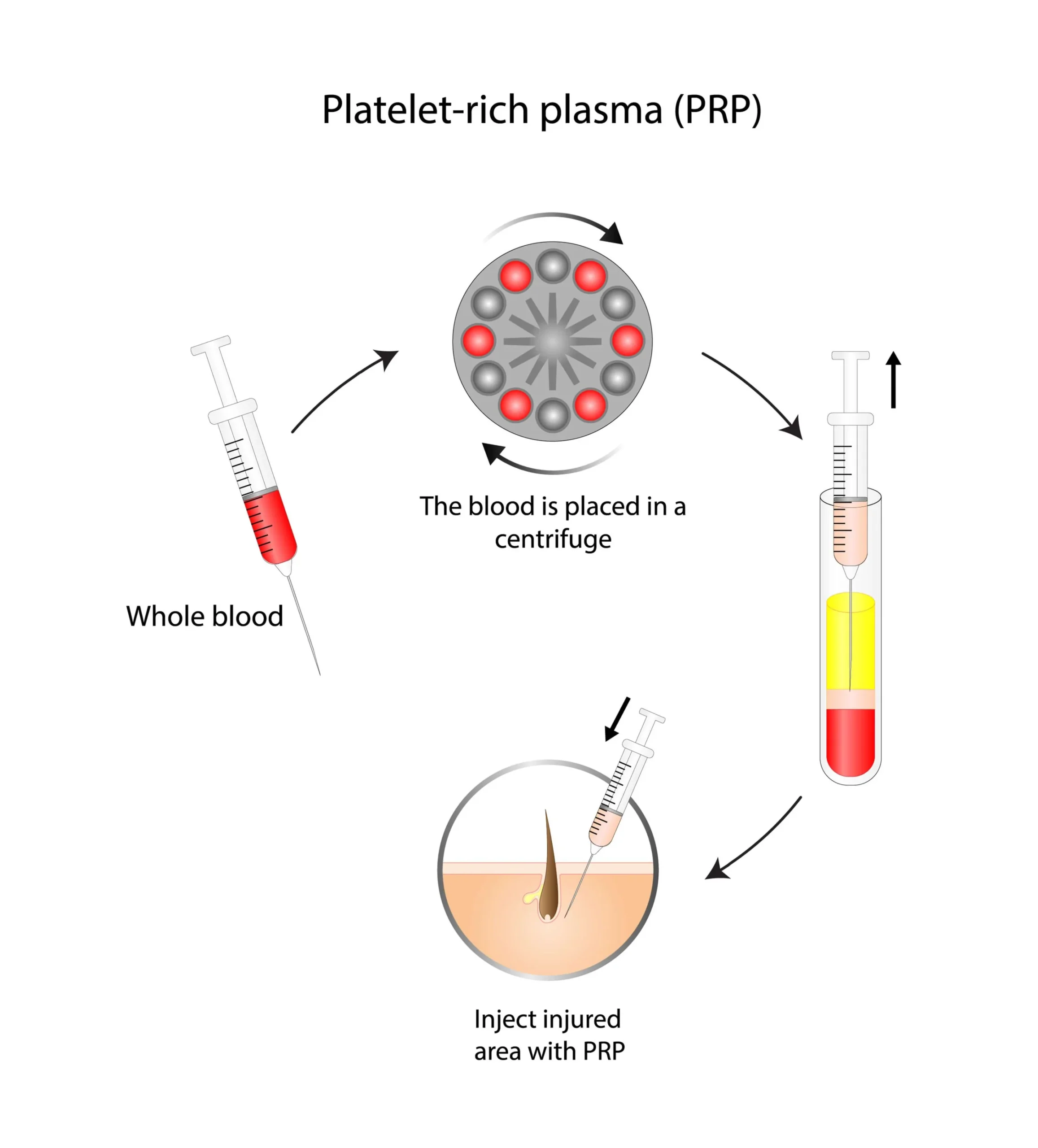
Platelet-rich plasma (PRP) is a component of blood that is enriched with platelets, which play a crucial role in healing by releasing growth factors that promote hair regeneration. PRP is created by drawing a small amount of a patient’s blood and processing it through a centrifuge to separate the plasma from red blood cells and other components. The resulting fluid is a substance that’s full of growth factors and a higher concentration of platelets than what is typically found in blood. This makes it valuable for hair regrowth.
How does PRP for hair loss work?
For platelet rich plasma hair treatment, a small amount of blood is drawn from the patient’s arm.
Then the blood is spun in a centrifuge machine. This process effectively separates out the PRP from the rest of the blood components.
After this separation, the concentrated substance is carefully injected directly into the scalp, targeting areas that require treatment. Multiple treatments are typically required for the best results.
Does PRP work for hair loss?
When injected into the scalp, PRP stimulates hair growth, stimulating hair follicles and increasing the thickness and volume of those follicles. The growth factors in PRP also provide nutrition to the scalp and improve blood supply, which helps maintain healthy hair follicles.
Research supports PRP for hair loss. A 2021 study found that after 6 months of PRP treatment, hair density and hair follicle diameter increased compared to the initial tests. Participants in the study also experienced minimal side effects. Another study in 2018 found that PRP increased hair count and density, and it was maintained 3 months after treatment.
When will you notice hair regrowth?
One 2014 study found that patients undergoing PRP treatment saw an increase in hair density after 6 weeks. Significant improvements were found after 3 months of treatment.
How long does PRP last for hair loss?
One 2014 study found that hair density peaked at 3 months after treatment, but this can vary based on individual factors such as genetics, underlying health conditions, and lifestyle habits.
Therefore, we recommend you get treatment about every 3 months.
Unlike surgical options, shockwave therapy does not require incisions, meaning there is no risk of infection or lengthy recovery times. Patients can return to their daily activities almost immediately following treatment. Surgery can also be very expensive.
Cost of PRP for hair loss
The cost of PRP for hair loss varies by clinic. On average, one session costs $500 to $750. The number of sessions needed for optimal results also varies depending on the individual’s hair loss and response to treatment.
MIMIT Health offers packages for multiple sessions. Please contact us by texting or calling (877) 427-3622 for details.
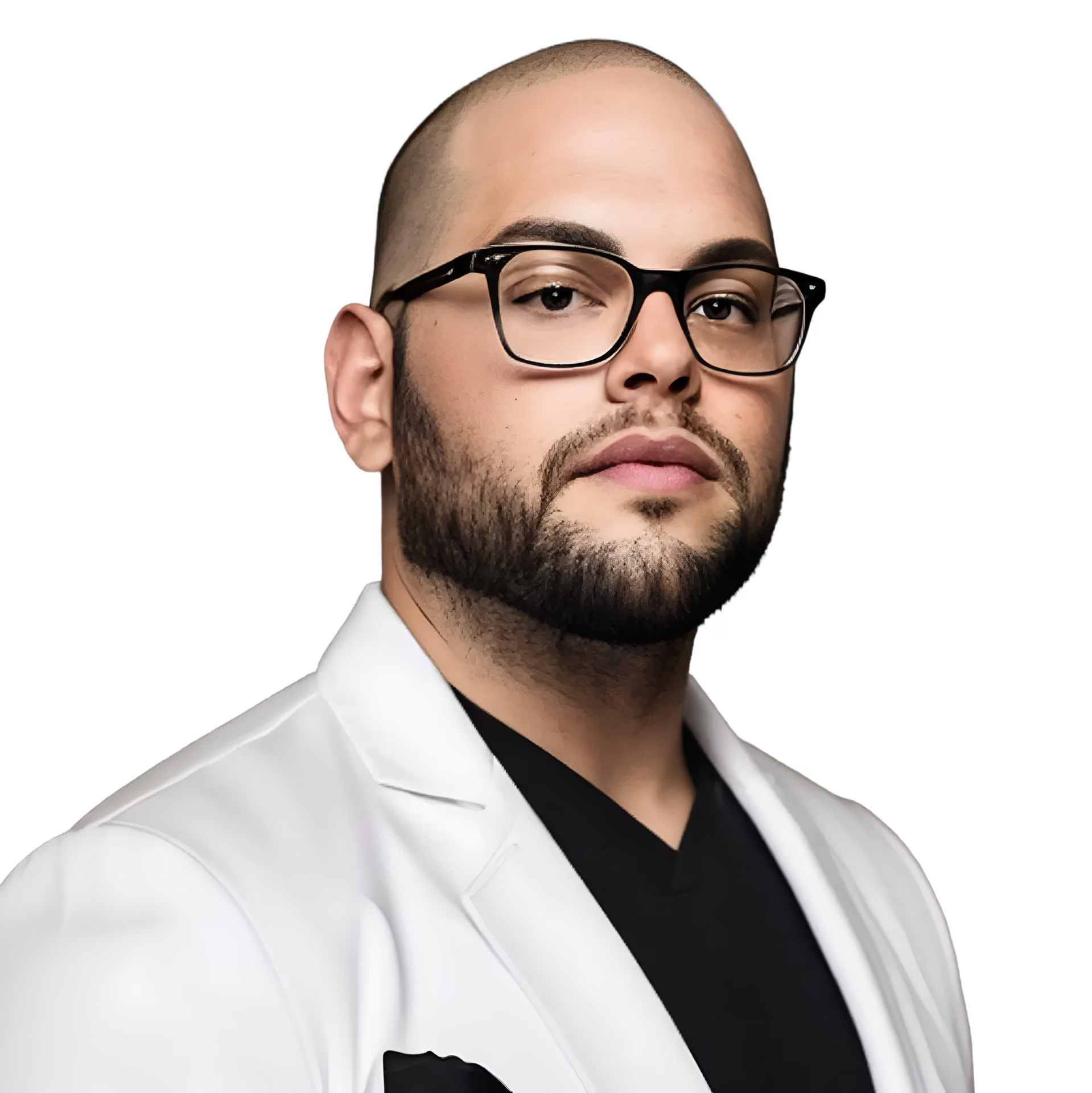
Dr. George Antonopoulos
Arogya Medical Co-founder
Medical Specialist
Potential PRP injection side effects
Infection
One potential complication following a platelet-rich plasma injection is infection. This can occur if proper sterile techniques are not followed during the procedure or if the injection site is not adequately cleaned before the injection. At Arogya Medical, our providers ensure infection doesn’t occur.
Nerve injuries
Nerve damage can occur if the injection is not administered correctly, leading to symptoms such as pain, numbness, or weakness in the affected area. However, we ensure the injections are done correctly. Our Regenerative Care provider, Dr. George Antonopoulos, DNP-FPA, APRN-BC, MSN-FNP, has a lot of experience with this procedure.
Pain and swelling at the injection site
Some patients may experience temporary inflammation and pain after the procedure, which is part of the natural healing response. Patients are still able to leave the office and return home on the same day.
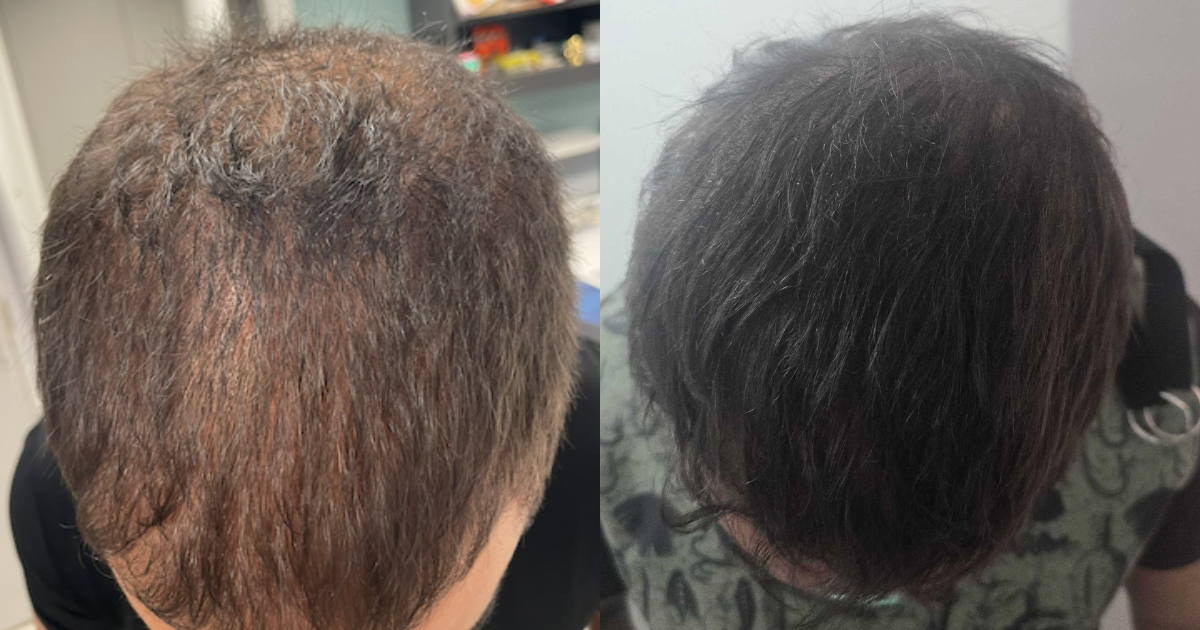
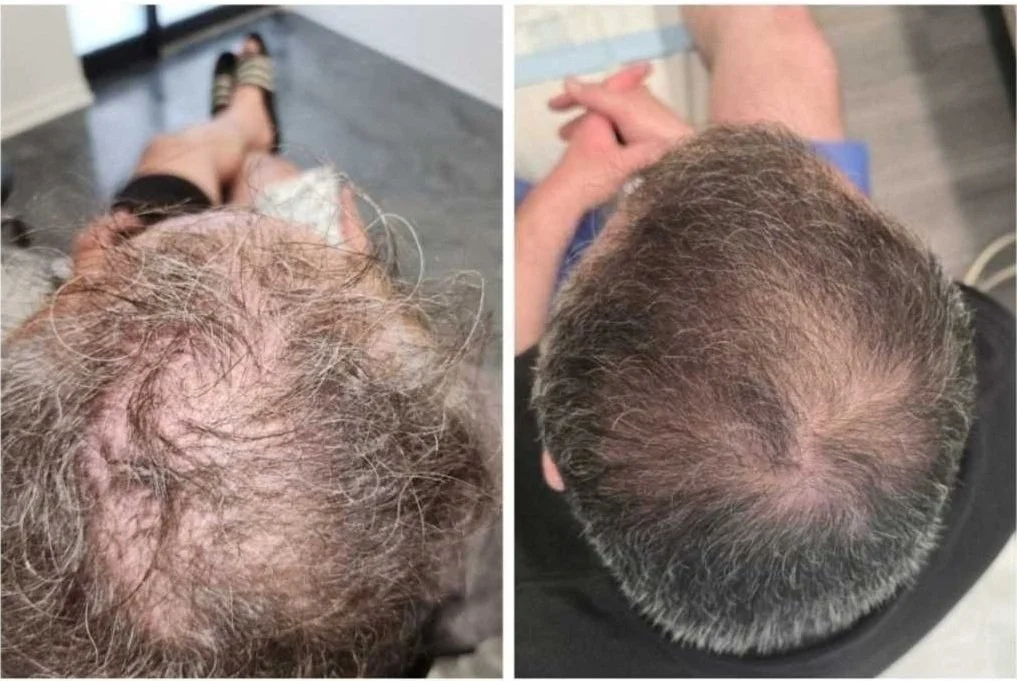
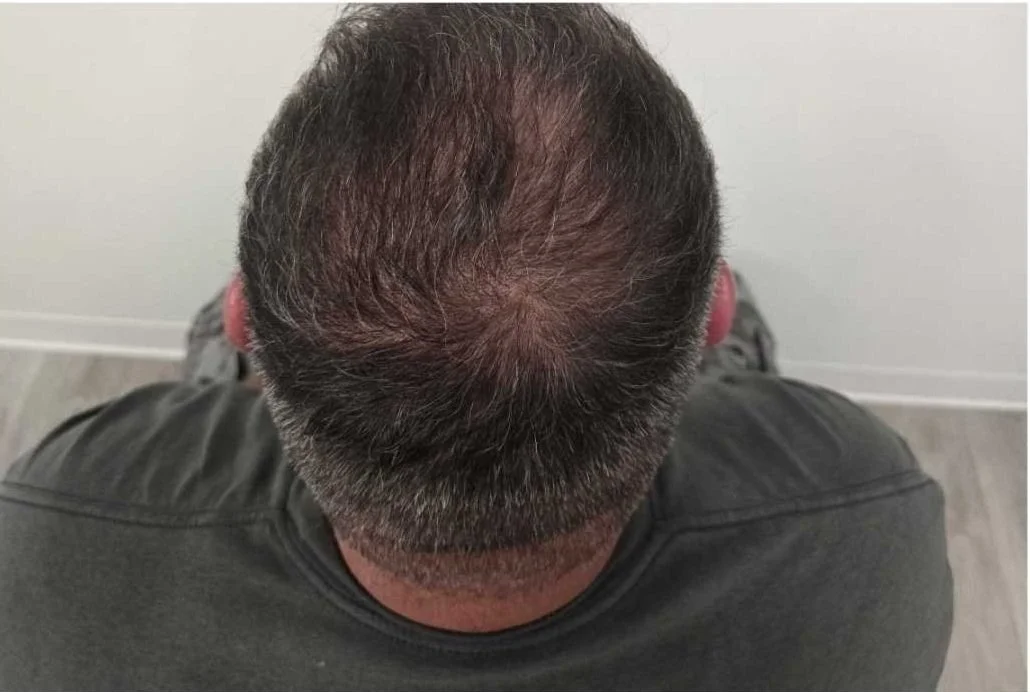
Many patients notice visible improvement
Arogya Medical innovative hair restoration treatments offer men a proven solution to regrow their hair and achieve remarkable results.
Our team of experts harness the power of the body’s own natural healing abilities to stimulate new hair growth and restore a fuller, healthier head of hair.
Through personalized treatment plans, Arogya Medical provides a safe and effective path to reclaiming confidence and embracing a renewed sense of self.
Recovery and Aftercare:
Managing Discomfort:
After the injection, the area may be iced to reduce any swelling or discomfort, and you’ll be given post-procedure care instructions. Over-the-counter pain relievers can be used to alleviate discomfort, but it is advised to avoid non-steroidal anti-inflammatory drugs (NSAIDs) as they may interfere with the healing response.
Following Advice:
It is important to follow the specific advice provided by our healthcare provider. Follow post-treatment instructions closely for optimal recovery and healing.
Who Might Benefit from PRP Hair Treatment?
- Men and women with early or moderate thinning, not complete baldness
- People with certain types of androgenetic (pattern) hair loss
- Those who have tried topical/oral treatments and want an additional option
- Non-smokers or those willing to cut back; generally healthy; realistic expectations.
Why Choose Arogya Medical in Chicago for PRP Hair Treatment?
Medical evaluation of your hair loss type
We assess the pattern and possible causes of hair thinning before recommending PRP, and discuss when other treatments or referrals may be better.
Evidence-informed protocols
We follow current guidelines on PRP preparation, injection patterns, and treatment intervals rather than using a one‑size‑fits‑all approach.
Combined treatment strategies
When appropriate, we pair PRP with topical or oral therapies, nutrition, and scalp care to support results.
Honest discussion of expectations
We are clear that PRP does not work for everyone, results are gradual, and complete regrowth is unlikely in areas of long‑standing baldness.
Follow-up and tracking
We use photos and clinical follow-ups to track changes over time and decide whether to continue, adjust, or stop treatment.
Ready to Experience Exceptional Care?
Risks and Side Effects
- Scalp tenderness, swelling, or bruising at injection sites
- Temporary headache, tightness, or itching
- Small risk of infection or bleeding with any injection
- Rare flare of inflammation; need to call if severe pain, pus, or spreading redness.
Frequently Asked Questions
Q1. What is PRP for hair loss?
PRP (platelet-rich plasma) hair treatment uses a concentration of platelets from your own blood. After a small blood draw, the sample is processed and the platelet-rich portion is injected or applied to areas of thinning scalp to support hair follicle function.
Q2. Who is most likely to benefit from PRP hair treatment?
PRP tends to be considered for men and women with early or moderate thinning, especially androgenetic (pattern) hair loss. It is less likely to help in areas where the scalp is completely smooth and hair follicles are no longer present.
Q3. How many PRP hair sessions will I need?
Most protocols involve a series of treatments, often once a month for several months, followed by maintenance sessions spaced further apart. The exact schedule depends on your pattern of hair loss and how you respond over time.
Q4. Does PRP for hair loss hurt?
You may feel brief stinging or pressure during injections. We can use numbing methods to make the procedure more comfortable. Some people experience scalp soreness or tightness for a day or two afterward, which usually improves with simple measures.
Q5. What are the possible side effects?
Common side effects include redness, tenderness, swelling, or bruising where PRP is injected. As with any injection, there is a small risk of infection, bleeding, or inflammation. Serious complications are rare but you should contact us if you have severe pain, spreading redness, or other concerning symptoms.
Q6. When will I see results?
Any changes are gradual. It often takes several months and multiple sessions to see whether there is improvement in hair thickness or shedding. Some people notice fuller or denser hair, while others see little change.
Q7. Can PRP replace other hair loss treatments?
PRP is usually used alongside, not instead of, other treatments such as topical minoxidil, certain oral medications, or lifestyle changes when appropriate. We review all options and help you decide on a plan that fits your overall health and goals.
Q8. How much does PRP hair restoration cost in Chicago?
At Arogya Medical, PRP hair treatment typically costs $500 to $750 per session, with the total plan depending on how many sessions your treatment calls for. We provide a clear, personalized quote at your consultation before you commit to anything.
